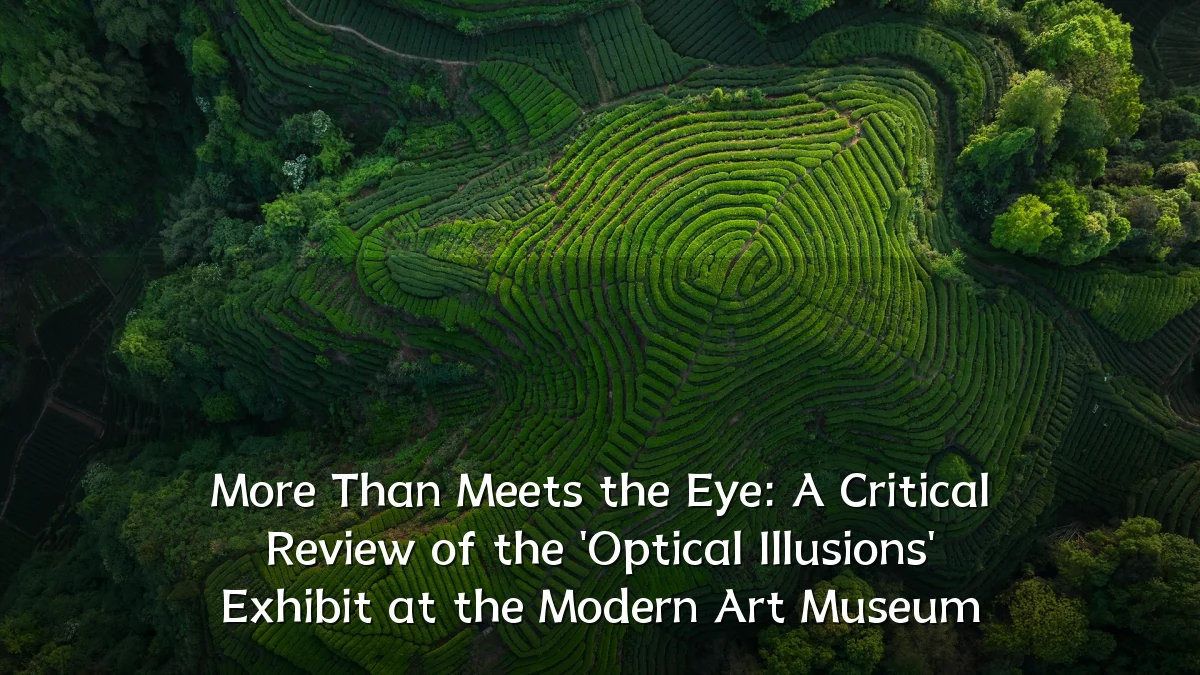
More Than Meets the Eye: A Critical Review of the 'Optical Illusions' Exhibit at the Modern Art Museum
Recent Trends in Immersive and Perceptual Art
Over the past several seasons, museums have increasingly turned to interactive and perception-based exhibitions to attract broader audiences. The “Optical Illusions” exhibit at the Modern Art Museum rides this wave, blending classic trompe-l’oeil techniques with digital installations that warp depth, scale, and motion. Curators are leaning into the psychology of seeing, moving beyond static works to environments that change depending on the viewer’s position.

Background of the Exhibit
The Modern Art Museum’s “Optical Illusions” is a temporary show that gathers works from a range of contemporary artists known for distorting visual reality. The gallery space is divided into zones simulating impossible geometries, moiré patterns, and dynamic light projections. The exhibition’s premise is not merely to entertain but to challenge assumptions about how the brain interprets visual data. Many pieces reference historical op art pioneers like Vasarely and Riley, but updated with modern projection-mapping and AR elements.

Common Viewer Concerns
- Accessibility: Some installations rely on precise head-position or bright strobes, which can cause discomfort for those prone to migraines or with vestibular disorders. The museum provides advisory signage, but not all spaces offer seating.
- Depth vs. Gimmick: Critics note that while the illusions are visually striking, a few pieces sacrifice conceptual depth for immediate “wow” effect. Return visitors sometimes find the experience diminishes after the initial surprise.
- Crowd and Flow: On weekends, popular rooms create bottlenecks, as visitors linger to capture smartphone photos. The museum has not yet implemented timed ticketing for this exhibit, leading to uneven foot traffic.
Likely Impact on the Museum and Visitors
The exhibit is expected to boost attendance among younger demographics and social-media-savvy audiences, aligning with the museum’s broader strategy to expand its digital footprint. However, the emphasis on optical tricks may draw scrutiny from traditionalist patrons who prefer narrative-driven or historically contextualized art. The show’s popularity could accelerate investment in future immersive installations, though it also raises the bar for balancing spectacle with substantive curation.
What to Watch Next
- Reception of educational programs: The museum plans guided tours that explain the neuroscience behind the illusions—if uptake is strong, similar science-art hybrids may become regular features.
- Adaptation of space: The museum may retrofit its largest hall for longer-term immersive exhibitions, depending on the foot traffic and revenue data from this run.
- Critics’ longer-term assessments: Art journals are expected to publish deeper analyses within the coming months, focusing on whether the show advances perceptual art or merely repackages existing effects.